
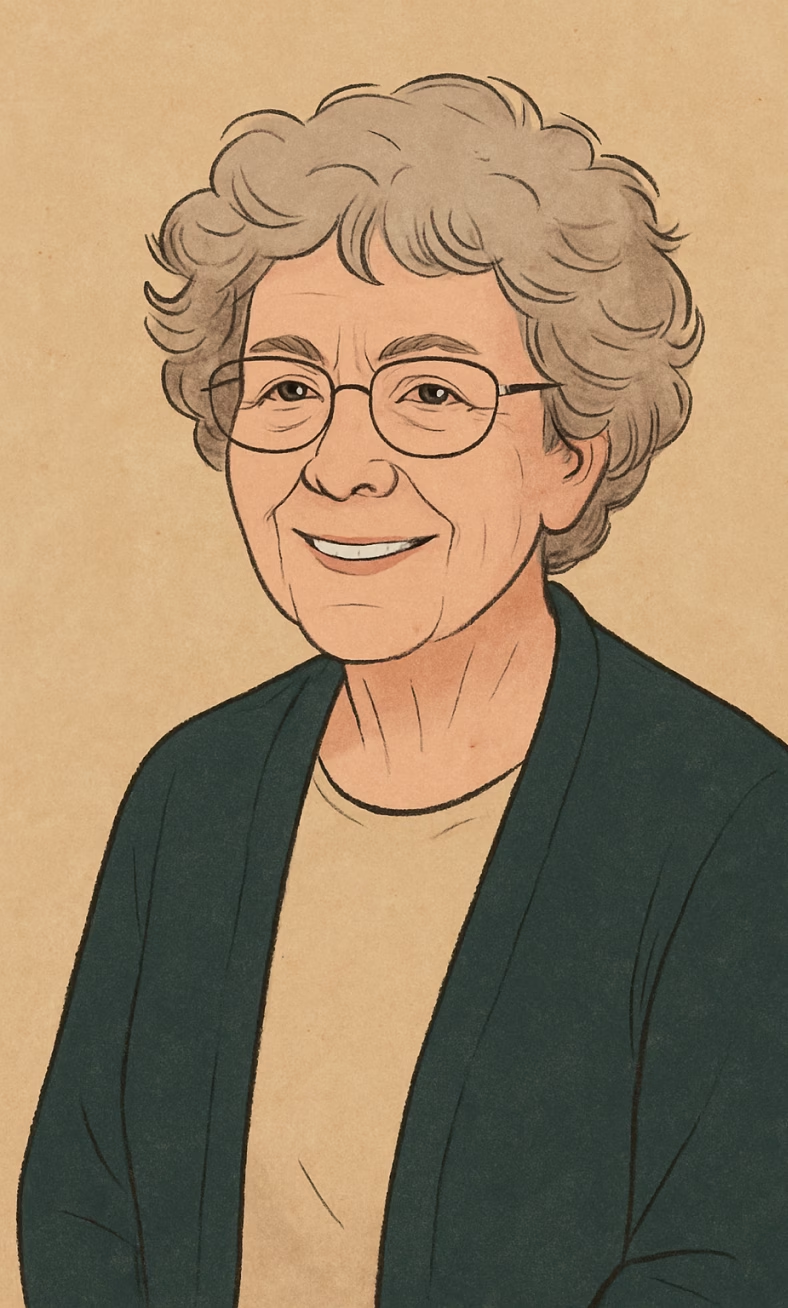
Lorna Wing
Understanding Her
Scientific Legacy
Reading time: 6 to 7 minutes
Who is Lorna Wing? Many of you know her for her involvement and the major advancements she brought to autism research. But behind her career lies a woman with her own story, family, and passions, which we will explore here.
Private Life and Passions
Lorna Gladys Wing was born on 7 October 1928 in Gillingham, Kent, England. She was born just before the Second World War into a structured and cultured family. Her father, Bernard Newberry Tolchard, was a naval engineer in the Royal Navy. However, we have no information about her mother Gladys Ethel (née Whittell)’s professional situation—she was probably a housewife, as was customary at the time.
“Those who knew her well described a young woman who was both attentive to others and possessed a subtle sense of humour.”
According to her colleagues, Lorna Wing was known for her discreet humour and kindness. She was described as humane, humble, and generous, particularly attentive to the needs of others. The psychiatrist loved gardening, an activity where she found relaxation away from her demanding work. She was a great fan of detective novels and animals, especially cats, which she believed provided comfort to the families and children she worked with.
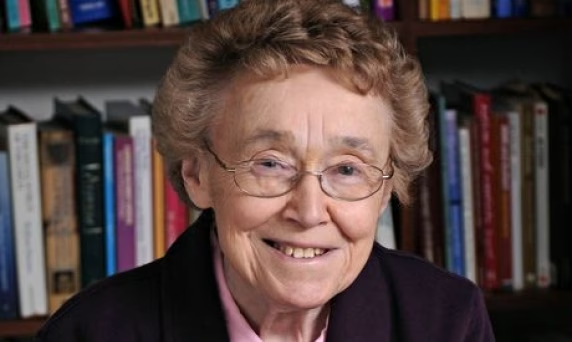
Lorna Wing
Her Years of Study
In 1949, Lorna Wing began her studies at University College Hospital in London. At the age of 21, she started medical school with a specialisation in psychiatry. It was there that she met her future husband, John Kenneth Wing, during an anatomy class—they even worked together dissecting the same cadaver. Her husband specialised in general and clinical psychiatry, while she focused on child and adolescent psychiatry, with an emphasis on autism, as we will see later.
The Family Turning Point
According to various sources, Lorna and John married in 1950 or 1951 and had a daughter named Susie in 1956. It turned out that their child showed signs of autism. This profoundly impacted Lorna Wing’s life, both personally as a mother and professionally. The exact date of Susie’s official diagnosis is unknown, though it can be assumed it was made in the 1960s, when her mother began investing in autism studies and associations.
These personal challenges laid the foundation for Lorna Wing’s lifelong commitment to autism research and support for those affected.
These experiences formed the basis of Lorna Wing’s dedication, which we will explore in more detail in upcoming articles. The psychiatrist introduced the concept of the “autism spectrum” and popularised the term Asperger’s syndrome in the English-speaking world in 1981. She was also co-founder of the National Autistic Society, established in 1962 in the UK. This association aimed to support families of autistic children, raise public and institutional awareness, and influence educational and social policies. She was a member of the Scientific Staff of the Medical Research Council’s Social Psychiatry Unit until her retirement in 1990. However, she continued her involvement in associations, committees, and advisory boards related to her previous work. Lorna Wing collaborated with various organisations for disabled children in the UK, often aiming to integrate autistic children into educational and social systems.
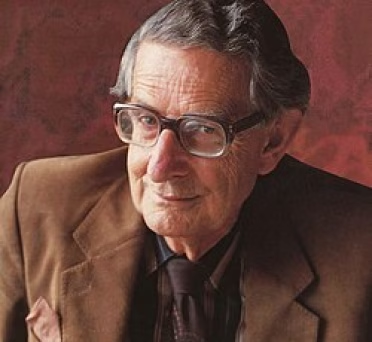
John Wing, Lorna Wing’s husband
A Final Tribute
Sadly, on 6 June 2014, after many years living in Sussex, Lorna Wing passed away in Bessels Green, Kent, England, at the age of 85. The cause of death was bronchopneumonia. Beyond her scientific contributions, Lorna Wing will be remembered as a caring and passionate woman whose personal life and choices shaped her dedication to autistic children and families.
The community is immensely grateful for her work, as you will see in an upcoming article—she greatly contributed to bringing autism into the spotlight by speaking of it as a spectrum, thus highlighting the diversity of this disability.
Numerous people and media paid tribute to Lorna Wing after her death, from international articles like the New York Times (“Dr. Lorna Wing, Who Broadened Views of Autism, Dies at 85”) to blogs and forums in the autistic community, such as the one written by Alexandra Reynaud on Les tribulations d'une aspergirl, testifying to the ongoing influence and recognition she inspires.
Other Articles